 |
| Image from Bitmoji.com |
My BluePrint: “About Me” Lesson Ideas
A Magical Carpet Ride
I set out on this journey believing the following:
- Children are unique with many individual strengths and must have a learning environment that supports their physical, mental, emotional, and social growth.
- As an educator, I intend to create a safe, inclusive, calm, and positive environment where students feel encouraged to pursue their personal interests and take risks.
- I hope students embrace their mistakes and feel pride for their many accomplishments.
Now, replace children and students with myself as a learner. In short, I began this inquiry project with little confidence in my abilities as a 21st century learner. My childhood communication tool to the outside world was a rotary dial phone.
 |
| Image from artfire.com |
I felt too self-conscious to reach out for support from colleagues and was overwhelmed with help tutorials and video instructions on the internet.
I learned to change my growth mindset and develop a personal learning network. Carol Dweck, author of Mindset, The New Psychology of Success, urges us to praise the process and the resilience, YET, not the end product and natural talent, the NOW.
 | ||
|
☝ Never Stop Growing.
✌ Experiment and Innovate.
👍 Ask Questions.
👌 Be Flexible.
✊ Reflect. Reflect. Reflect.
👏 Learn New Technology.
Bippity, boppity, boo! I did, I am, I will continue to.
My Blueprint is an online, visual student driven portfolio. I created a virtual classroom where students could practice self-awareness skills and explore their interests, abilities, and passions. They were able to use multimodal ways (video, audio, pictures) to document their growth. Other teachers in the school and families can also connect and have the same access as the teacher - post, comment, offer feedback, add stickers. It is most definitely a work in progress; the students' portfolio are emerging. By term 2, I would like to see us at developing, then proficient by June 2021. Here are a few samples (click to enlarge):
 |
| Image from student portfolio; Myblueprint.ca, 2020 |
 |
| Image from student portfolio; Myblueprint.ca, 2020 |
Y
 |
| Image from student portfolio; Myblueprint.ca, 2020 |
 |
| Image from student portfolio; Myblueprint.ca, 2020 |
As I look back on my first blog posts, I wanted to delve deeper into one digital tool that focused on growth of the individual learner. We were bombarded with new technology during remote learning, so I isolated My Blueprint and the About Me section. As Ron Weasley once said, “What’s life without a few dragons?” (J.K. Rowling, 2000)
1. TIME - We only had full sets of iPads alternate weeks and finding a large chunk of time, without interruptions to explore, was a rare treasure.
2. ABILITY - Some students were able to navigate the program with ease. Others spent most of their time just logging in. Thankfully we have been talking about "The Power of Yet" and students were praised on perseverance rather than completed work. No tears.
3. DEVICE SETTINGS - Some students didn't have their camera/video working. Others would crash because there were too many photos taking up space. Then there was the spinning wheel of impending crash and burn. We shrugged, tried other devices, e-mailed IT, again, thankfully, no tears.
4. COMPREHENSION - There was A LOT of background knowledge that needed to be taught and prepared; some that were understandable like explaining the abstract, symbolic concept of personal values and attributes. Then there were others like, "You don't know where your family is originally from? No, not Coquitlam, before that. No. Not Alberta, your great grandparents?"
5. COLLABORATION - In the past, I relied a lot on students supporting each other, but with COVID-19 restrictions, masks/no masks, and just for health & safety reasons, students were left waiting for support.

“There is still much worth in having a shared experience, a common narrative for learning.”
- Richardson, 2012
Moving Forward. . .
After I get valuable feedback from members of LIBE 477, I would like to do some touch-ups, download the Pages artifact into my school's Teams channels,
and discuss it during future grade group collaboration time with other primary teachers, our MBP leads at the school, and administration. I then would like to have a virtual meeting with the district's leads for more feedback, then upload the document to the district's Teams Channels under Digital Learning (gulp!). It’s looking pretty empty...
 |
| Image from tech community.microsoft.com |
and discuss it during future grade group collaboration time with other primary teachers, our MBP leads at the school, and administration. I then would like to have a virtual meeting with the district's leads for more feedback, then upload the document to the district's Teams Channels under Digital Learning (gulp!). It’s looking pretty empty...
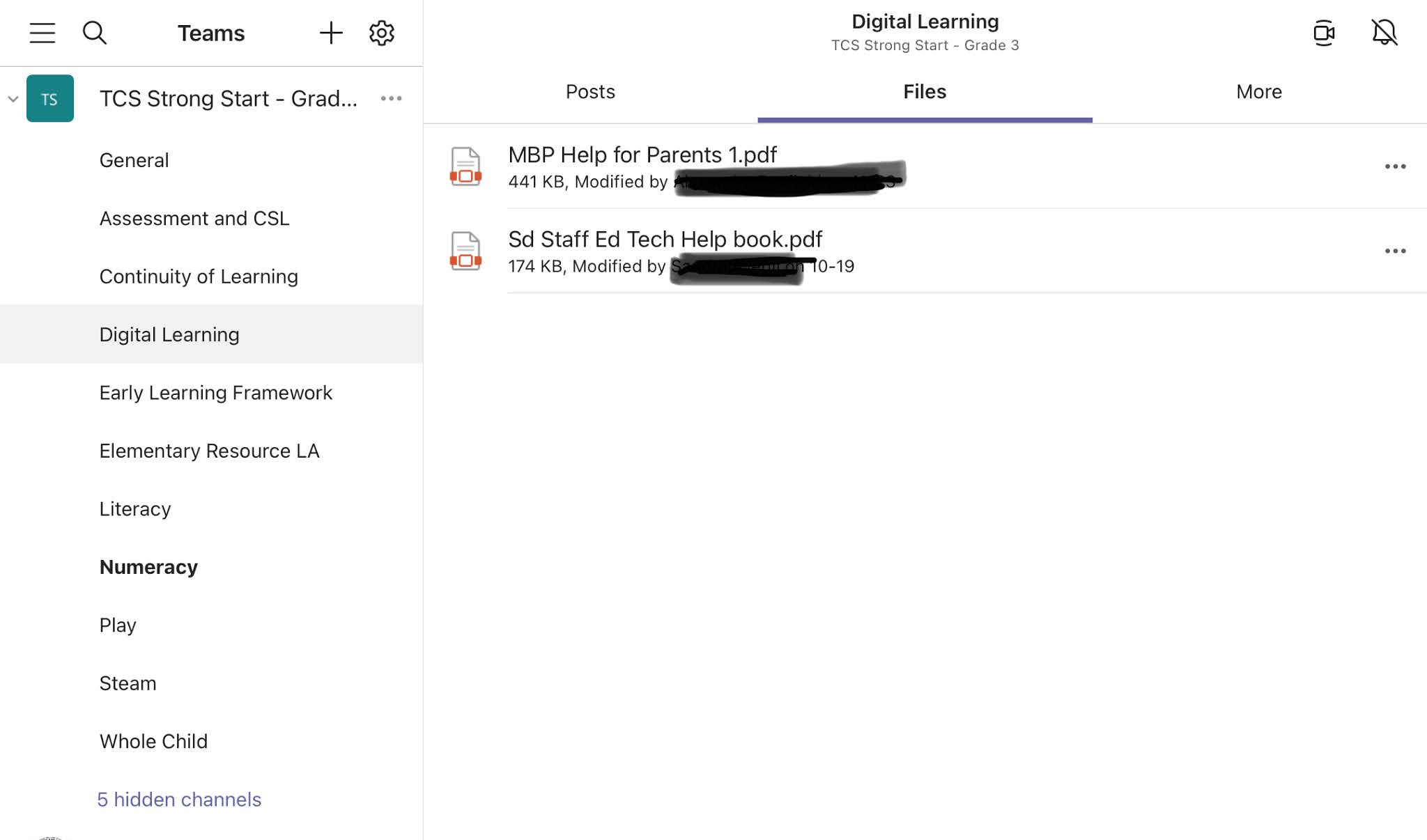 |
| image from Teams, 2020 |
I’m feeling inspired by the creative innovators of this course and encouraged to know that their ideas for fostering literacy, building critical thinking skills using hybrid models, and vetted apps and digital programs are out there in the “technagical” venture.
 |
| Image from Bitmoji.com |
Works Cited
Deak, J. (2016, August 23). Your Fantastic Elastic Brain READ ALOUD! ~ Stem for Kids
DoubleThink Inc. (2020). MyBlueprint.ca. Retrieved December 01, 2020, from https://myblueprint.ca/
Gunn, J. (2019, October 25). How to Build a Growth Mindset for Teachers: Resilient Educator. Retrieved December 01, 2020, from https://resilienteducator.com/classroom-resources/growth-mindset-for-teachers/
Kid Time StoryTime (Producer). (2016, August 23). Your Fantastic Elastic Brain READ ALOUD! ~ Stem for Kids [Video file]. Retrieved December 1, 2020, from https://youtu.be/8QSPfnQCIY0
Richardson, Will (2012). Why School? How Education Must Change When Learning and Information are Everywhere [eBook edition]. Ted Conferences.


