Search This Blog

Showing posts with label virtual. Show all posts

Friday, February 10, 2023

LIBE 467 Assignment 1 - Evaluation of a Resource World Book Digital Encyclopedia


World Book Digital Encyclopedia

www.sd35.bc.ca


Background

Photograph taken in Langley, B.C.  2021

Donna Gabriel Robins Elementary (DGRE) enters year 2 this school year and we are in the midst of our first full year of providing services to the school community.  With the support of the district librarian and librarian technician that helped design the physical space and purchase physical materials to fill the shelves, two DGRE teacher librarians continue to work as a team to meet the following goals:
  • getting to know the community to help with selecting appropriate materials to meet student and staff interests and cover curricular content, keeping equity, diversity, and inclusion in mind
  • foster a love for reading by promoting the collection within-house and sources within the district, advertising local events, connecting with the neighbourhood community, building a relationship with the nearest public library's librarians
  • support reading programs
  • encourage collaboration
  • creating policies and procedures for selection, weeding, circulation, maintenance, inventory
  • find fundraising opportunities to build makerspaces, ADST materials, and LC-related equipment, as well as print materials
Weeding might not be at the forefront of concerns this year, but the following components are:
  • being knowledgeable about the school collection
  • evaluation of the collection and student and staff feedback to guide future selections
  • knowing and providing digital and physical resources that are accessible and relevant to the school's needs

Evaluating resources is extremely important as the building of the physical collection continues.  According to Riedling, reference sources can be divided into two main classes:

1) compilations that furnish information directly (encyclopedias, dictionaries, almanacs, handbooks, yearbooks, biographical sources, directories, atlases)

2) compilations that refer to other sources containing information, merely indicating places in which information can be found (bibliographies and indexes).

(2013, 18)

Physical resources are limited in DGRE's K-5 collection:


Figure 1  Destiny Catalog


Figure 2 Destiny Catalog
     

World Book Digital Encyclopedia

Staff is able to view collections created in Destiny or the district's digital resources page.  The WORLD BOOK digital resources is provided to staff and students through Focused Education Resources.  With a universal username and password, SD35 staff and students can access the research platform and its vetted databases at home and at school.  The district funds this, so it saves individual schools time and money.


"In all formats, encyclopedias remain essential reference sources for school libraries" (Riedling, p.70, 2019).  In K-5,  there is a trend of educators and districts moving away from universal texts covering one subject area.  An example of a classroom resource covering one subject area is Math Focus 3, last published in 2009.  Most educators are unable to fully use the program and rather supplement, adapt, and modify to differentiate for students in order to meet them where they are at. 


Teachers individually create their own cross-curricular programs connecting to their strengths and passions.  Encyclopedias will not be the sole resource utilized in a project, but act as "...springboards to additional information", as a ready reference (Rielding, 2019, 17).  Below is Riedling's Evaluation of Encyclopedias and the Langley School District's Evaluation of Resources:

Figure 3 Riedling's Evaluation of Encyclopedias

                    
In combination with Langley's evaluation form and Riedling's evaluation of encyclopedias and Langley's evaluation criteria for learning resources, below is a rubric created for non-print encyclopedias:
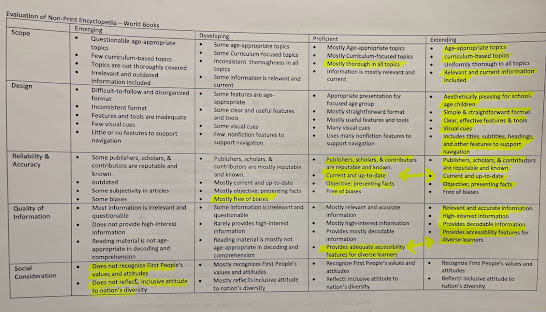
Figure 5 Evaluation of Non-Print Encyclopedias
World Book Encyclopedias in highlights

World Book Early Learning

World Book Early Learning is geared to younger learners (K-2), the colourful, child-friendly presentation allows students to explore rather than pose a specific question that requires deeper research.  This aligns with the B.C. Curriculum in a number of ways.  Below are a few Big Ideas from K-3  that World Book Early Learning incorporates:

Career Education Big Ideas
  • Learning is a life-long enterprise.
  • Everything we learn helps us to develop skills.
ADST
  • Technologies are tools that extend human capabilities.
  • Designs grow out of natural curiousity.
Language Arts
  • Curiousity and wonder lead us to new discoveries about ourselves and the world around us.
  • Stories and other texts help us learn about ourselves, our families, and our communities.
Text can be overwhelming for early readers.  Students can hover over pictures and words for verbal instruction.  The voice is set as a child's voice.  World Books Early Learning is fully functional and can be used on cell phones, tablets, laptops, and computers.  Subject matter like animal homes, dinosaurs, senses, and community are popular themes, which are included in videos and stories.  Popular nursery rhymes are sung and students can follow along.  Games can be played individually or collaboratively. 


Teachers are able to click on "For grownups" and search for material by curriculum, grade, and topic.  They provide lesson plans, as well as a guided reading program to support language competencies.  This is not to say that this platform was made to cover the entire curriculum.  "Encyclopedias should not be considered sole sources of information, although they do assist in directing and strengthening a student's subsequent work" (Riedling, 2019, p.71).  If a teacher is working on counting to 20 or discussing the seasons, there are many supplementary activities through stories, songs, and games throughout the encyclopedia.  It is a very robust resource; with tutorial videos, training guides, and extensive tech support. 

World Book Kids

World Book Kids

World Book Kids is designed for independent readers.  The design is similar to Early Learning and the choices of activities are more diverse, with a search function as the centre focus of the home page.

World Book Kids

Extra features to World Book Kids:
  • Search feature which leads to multimodal information (articles, videos, photographs) within and vetted "extra resources" outside of the World Books.
  • information has many accessibility features: text, voice, and voice speed, translations of text and voice into many languages
    • 30% of DGR students are English language learners.  Many more students have adults in their home speak a second language.  This was very popular.
  • MLA, APA, and Harvard citations of articles provides
  • Lexile measure
  • engaging, age-appropriate interactive activities for general exploration: puzzles, maps, games, science experiments
World Book Kids addresses diverse languages, but doesn't address Indigenous perspectives, even with the advanced search option.  Unless students are specifically researching Tlingit or residential schools, the Indigenous perspective is not interwoven within the games, activities, and articles.  Overall, World Book Kids allows students to be more independent and research-oriented.  Teachers can use tutorials to help students plan their inquiry.  

World Book Discover

World Book Discover has the same articles found in World Book Kids.  With its title Discover, the material is organized by topic and with a more inquiry-style format.  Similar to platforms like Netflix or Apple TV, World Book Discover organizes information by Featured and Popular.  The games are more advanced (multiplication, roman mythology, know your music notes) and students are able to create a student login that will save all their articles for research, and keep their high scores for games.  Information, games, and activities would not suit many intermediate students in elementary school, but I can see them being used in late middle school or early high school. There were a lot of American-focused activities.  This might be more of an explorative platform in term 3 with Grade 5s as they think forward to middle school and the resources that are available to them.

Potential Physical Resource: National Geographic Kids World Atlas 6th Edition


Published in 2021, the National Geographic Kids World Atlas Sixth Edition is one of the most current atlases available to K-7 students.  In the B.C. Curriculum, mapping is part of the key skills related to the Social Studies' core competencies.  The resource helps break down how to use an atlas in its introductory pages.  Many visual features help with decoding and scanning for important information.  BIGGER font draws the eye to the general information, and various font sizes, subheadings, colour, and spacing of visuals like diagrams, photographs, and tables make the pages more engaging rather than overwhelming.  Images really highlight the diversity in flora, fauna, and culture.  Maps vary from topographical, thematic, and general reference.  Back of the Book information like the glossary, geo facts and figures, and the index are thorough, coloured, and varied font help with navigation.

Below are some screens shots of sample pages in the resource:


"A five-year-old atlas is considered historical" (Riedling, 2013, 80).  Currency is vital as old geographic sources become "obselete information to be considered only for historical purposes" (81).  When searching all elementary schools (45) in Destiny, finding more than 2 copies of one specific encyclopedia or atlas was rare.  Finding an atlas with a publishing date 2019 or later was extremely rare.  When searching for an appropriate resource for the elementary LC, looking for a resource that was less costly due to the need to replace it was frequent.


Figure 6 Riedling's Evaluation of Geographic Sources

Riedling already recommends National Geographic Atlas for current world and thematic world atlases (2013, 82, 83).  After researching different prices from various vendors, ULS provides this resource at a reasonable price of $24.79 CAD before taxes.  Many quality hardcover picture books cost near or more than that price.  Below is my highlight evaluation of the resource.  It is not suitable for K-2 typical reading levels, but because mapping and resource competencies occur in Grades 3+, reading decodability is within late primary and intermediate reading levels.  Teachers may use the atlas as part of beginning discussions of mapping, provinces, and countries before delving into more narrow topic-focused resources.
Evaluation of Atlas

Final Thoughts 

After discussions with elementary TLs in the district, the district librarian, and browsing other school collections in Destiny, many K-5 schools steer towards digital resources rather than physical ones for a variety of reasons.  "Many libraries find that their reference collection is shrinking rapidly; however, a good ready-reference collection continues to be a vital component of good service" (Crew, 2023, p. 37).   Budgets are limited and accommodating varying reading levels and subject areas in all grades is a challenge.  Teachers prefer digital resources due to easy access for students.  Having reliable and current resources is as important as having electronic resources.  "One of the most important tasks of a school librarian is to help students and teachers find the best materials available-in all formats-to support teaching and learning" (Riedling, 2013, 18).   Below are photographs of Donna Gabriel Robins Elementary's SLLC in September 2021, year one, and February 2023, year two.  Physical resources like encyclopedias and atlases are vital like picture books and graphic novels as it builds fostering literacy and community.

Photograph taken in Langley, B.C. 2021

Photograph taken in Langley, B.C. 2021

Photograph taken in Langley, B.C. 2021

Photograph taken in Langley, B.C. 2023

Photograph taken in Langley, B.C. 2023


References

Evaluating learning resources. Instructional Services | #Think35. (n.d.). Retrieved February 1, 2023, from https://instructionalservices.sd35.bc.ca/curriculum/locally-approved-resources/ 

Focused Education Resources. (2021, July 15). BC Digital Classroom. Focused Education. Retrieved February 1, 2023, from https://focusedresources.ca/en/bc-digital-classroom 

Geographic, N. (2021). National Geographic Kids World Atlas 6th edition (6th ed.). National Geographic Kids. 

Leominster Public Library. (2020, July 17). World book encyclopedia for kids tutorial. YouTube. Retrieved from https://youtu.be/nW0uk12lwUQ

Math focus (grade 3). Nelson. (n.d.). Retrieved February 2, 2023, from https://school.nelson.com/math-focus-grade-3/ 

Riedling, A. M., & Houston, C. (2019). Reference skills for the school librarian: Tools and tips. Libraries Unlimited, an imprint of ABC CLIO, LLC. 

TSLAC: Texas State Library and Archives Commission. TSLAC | Texas State Library And Archives Commission. (n.d.). Retrieved February 1, 2023, from https://www.tsl.texas.gov/ 


Tuesday, December 1, 2020

LIBE 477 Digital Artifact - Diamond in the Rough


Image from Bitmoji.com


My BluePrint: “About Me” Lesson Ideas


A Magical Carpet Ride

I set out on this journey believing the following:
  • Children are unique with many individual strengths and must have a learning environment that supports their physical, mental, emotional, and social growth.
  • As an educator, I intend to create a safe, inclusive, calm, and positive environment where students feel encouraged to pursue their personal interests and take risks.
  • I hope students embrace their mistakes and feel pride for their many accomplishments.
Now, replace children and students with myself as a learner.  In short, I began this inquiry project with little confidence in my abilities as a 21st century learner.  My childhood communication tool to the outside world was a rotary dial phone.
Image from artfire.com

I felt too self-conscious to reach out for support from colleagues and was overwhelmed with help tutorials and video instructions on the internet.

I learned to change my growth mindset and develop a personal learning network.  Carol Dweck, author of Mindset, The New Psychology of Success, urges us to praise the process and the resilience, YET, not the end product and natural talent, the NOW.


Image from bitmoji.com

In the article “Building a Growth Mindset for Teachers”, Jennifer Gunn outlines some sound advice that reflects my own key learnings from the course:
☝ Never Stop Growing.
✌ Experiment and Innovate.
👍 Ask Questions.
👌 Be Flexible.
✊ Reflect. Reflect. Reflect.
👏 Learn New Technology.


Bippity, boppity, boo! I did, I am, I will continue to.  

My Blueprint is an online, visual student driven portfolio.  I created a virtual classroom where students could practice self-awareness skills and explore their interests, abilities, and passions.  They were able to use multimodal ways (video, audio, pictures) to document their growth.  Other teachers in the school and families can also connect and have the same access as the teacher - post, comment, offer feedback, add stickers.  It is most definitely a work in progress; the students' portfolio are emerging. By term 2, I would like to see us at developing, then proficient by June 2021.  Here are a few samples (click to enlarge):

Image from student portfolio; Myblueprint.ca, 2020

Image from student portfolio; Myblueprint.ca, 2020

Y
Image from student portfolio; Myblueprint.ca, 2020

Image from student portfolio; Myblueprint.ca, 2020


As I look back on my first blog posts, I wanted to delve deeper into one digital tool that focused on growth of the individual learner.  We were bombarded with new technology during remote learning, so I isolated My Blueprint and the About Me section. As Ron Weasley once said, “What’s life without a few dragons?” (J.K. Rowling, 2000)

1. TIME - We only had full sets of iPads alternate weeks and finding a large chunk of time, without interruptions to explore, was a rare treasure. 

2. ABILITY - Some students were able to navigate the program with ease.  Others spent most of their time just logging in.  Thankfully we have been talking about "The Power of Yet" and students were praised on perseverance rather than completed work.  No tears.

3. DEVICE SETTINGS - Some students didn't have their camera/video working.  Others would crash because there were too many photos taking up space.  Then there was the spinning wheel of impending crash and burn.  We shrugged, tried other devices, e-mailed IT, again, thankfully, no tears.

4. COMPREHENSION - There was A LOT of background knowledge that needed to be taught and prepared; some that were understandable like explaining the abstract, symbolic concept of personal values and attributes.  Then there were others like, "You don't know where your family is originally from? No, not Coquitlam, before that.  No.  Not Alberta, your great grandparents?"

5. COLLABORATION - In the past, I relied a lot on students supporting each other, but with COVID-19 restrictions, masks/no masks, and just for health & safety reasons, students were left waiting for support.


“There is still much worth in having a shared experience, a common narrative for learning.”
- Richardson, 2012

Moving Forward. . .

After I get valuable feedback from members of LIBE 477, I would like to do some touch-ups, download the Pages artifact into my school's Teams channels,
Image from tech community.microsoft.com 

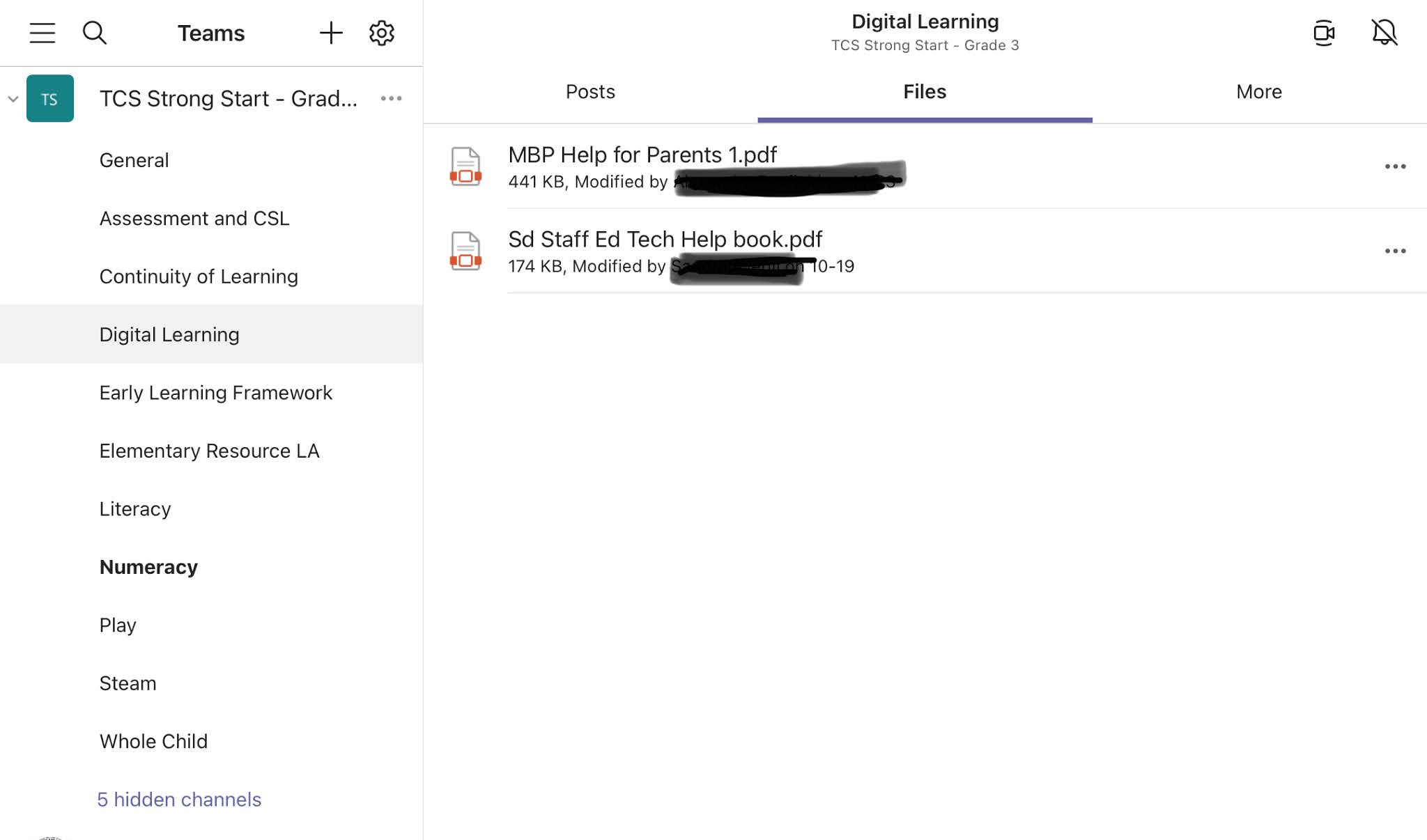
and discuss it during future grade group collaboration time with other primary teachers, our MBP leads at the school, and administration. I then would like to have a virtual meeting with the district's leads for more feedback, then upload the document to the district's Teams Channels under Digital Learning (gulp!).  It’s looking pretty empty...

image from Teams, 2020

I’m feeling inspired by the creative innovators of this course and encouraged to know that their ideas for fostering literacy, building critical thinking skills using hybrid models, and vetted apps and digital programs are out there in the “technagical” venture.


Image from Bitmoji.com
                           

Works Cited

Deak, J. (2016, August 23). Your Fantastic Elastic Brain READ ALOUD! ~ Stem for Kids

DoubleThink Inc. (2020). MyBlueprint.ca. Retrieved December 01, 2020, from https://myblueprint.ca/

Gunn, J. (2019, October 25). How to Build a Growth Mindset for Teachers: Resilient Educator. Retrieved December 01, 2020, from https://resilienteducator.com/classroom-resources/growth-mindset-for-teachers/

Kid Time StoryTime (Producer). (2016, August 23). Your Fantastic Elastic Brain READ ALOUD! ~ Stem for Kids [Video file]. Retrieved December 1, 2020, from https://youtu.be/8QSPfnQCIY0

Richardson, Will (2012). Why School? How Education Must Change When Learning and Information are Everywhere [eBook edition]. Ted Conferences.


Saturday, October 31, 2020

Making Learning Just a Click Away - LIBE 477 63A Module 8: Developing World Libraries/Mobile Devices


Module 8: Developing World Libraries / Mobile devices

image from dreamtime.com
In order for students to learn any new concept, they need multiple, dynamic opportunities to develop the skills required.  Right now, I am teaching place value in grade 3.  We are using number lines, base tens, counters, H/T/O charts, hundred charts, dice, cards, etc. to help students explain their learning.  So, perhaps little Johnny Q may not be able to show 104 in numeral expanded form, but he is getting more confident using base ten blocks, so the jump from concrete to symbolic form will come eventually with practice.

image taken Abbotsford, B.C. November 1, 2020

In saying this, students need access to devices to be able to maneuver the changing technologies that rules school and everyday life.  The opportunity to use different devices: smartphones, laptops, tablets; the better!  Not only does the technology support collaboration between students, teachers, classrooms local and global, and home, it can provide rich online resources like online libraries, educational videos, and museums.  Experts and expert material is available to all learners with the help of technology.

Visit the British Museum here --> https://www.britishmuseum.org/collection 

image from visitlondon.com

In the world of history and culture, the British Museum's collection online provides patrons with access to collections, exhibits, and galleries.  They stay connected with their own blog, social media like Twitter and Facebook.
https://twitter.com/wdlorg?s=21
image from bitmoji.com

The museum is still open to the public and e-mails newsletters if you subscribe.  They offer a summer program called the Youth CollectiveThey used to offer on site learning sessions and now offer virtual visits for school-aged children.  For youths, the Museum hosts a summer program called the Youth Collective.  Adults can experience talks, debates, performances, and coursework.  Community-led initiatives, exhibitions, programs, events and workshops are offered to the public.  


image from pinclipart.com

You can visit the World Digital library here --> World Digital Library.  WDL is operated by UNESCO and the US. Library of Congress and sports manuscripts, maps, photographs, rare books, and other cultural documents from as far back as 8,000 BCE.  You can follow them on Twitter @WDLorg.  Having the opportunity to bring these authentic invaluable pieces of human history within a click to your classroom is efficient on time, money, and resources.  As long as there is one piece of technology in the classroom, students despite socio-economic status and access to devices can participate in learning.


image from onebillion.org

https://onebillion.org/impact/partners-and-projects/

Onebillion.org is a UK non-profit organization that creates software globally that is made to bring technology into the hands of children. 


One tab is a created tablet that delivers learning: reading, writing, and numeracy activities to children in their own language. Onecourse also uses tablets for children in developing nations to play activities, games, and read stories through a structure literacy and numeracy course.  I truly recommend readers to take the time to visit their website and see the impactful work they are doing.


image from onebillion.org

image from bitmoji.com

This is not to say that the global community should stop making efforts to put physical texts in the hands of children to provide them with equal opportunity to learn how to read.  22 years ago, John Wood, a Microsoft executive visited Nepal and was affected by the state of school libraries.  He left his tech job and founded Room to Read.  You can read up more here as well --> John Wood's story"During its seven-year existence, the organization has opened nearly 5,000 school libraries and about 400 schools, donated more than 1.4 million English-language books, published 146 local-language titles, and touched the lives of roughly 1.5 million students in developing countries" (Bernard, 2008). 

image from bitmoji.com

At my own school level, University of the Fraser Valley human kinetics students volunteer their time to help with teaching PE, put in volunteer hours teaching activities, and supporting our annual Sports Day events.  They also collect books from our school to send to Antigua schools.

Do we need 1:1 at our schools?  Do educators need to be experts of each app/device platform?  https://theconversation.com/ten-reasons-teachers-can-struggle-to-use-technology-in-the-classroom-101114 My personal feeling is that there is not enough opportunity for in-service when districts introduce new platforms.  The expectation is that teachers use their own time.  As we are discovering, PLNS are necessary to further deep understanding of concepts and it does not happen independently.  I am not a "digital native" and I am learning as I go.  I am having great difficulty trouble shooting programs like MBP, Mathletics, and Teams when I myself am no expert. Then there is the inconsistency of workability with wi-fi at school, differences in technology at home, and devices working in proper order when needed.  

In order to continue to support 21st century learning, there needs to be at least one opportunity to provide as many ways to connect students to the world and collaborate with families and stakeholders to bring the information to the student.  This means putting in the footwork of finding grants, communicating with administrators, PAC, and community businesses to find funding to support this.

image from pbs.org

Works Cited

Bernard, S. (2008, January 12). Room to Read: Building Libraries, Schools, and Computer Labs in Developing Countries. Retrieved October 31, 2020, from https://www.edutopia.org/global-education-libraries-developing-countries

Brendon Hyndman Senior Lecturer and Course Director of Postgraduate Studies in Education. (2020, February 13). Ten reasons teachers can struggle to use technology in the classroom. Retrieved October 25, 2020, from https://theconversation.com/ten-reasons-teachers-can-struggle-to-use-technology-in-the-classroom-101114

Children. (n.d.). Retrieved November 01, 2020, from https://onebillion.org/impact/partners-and-projects/